Collecting guides
Vinyl or CD… Which Format Fits Your Collection?
Vinyl or CD? Compare release history, sound, wear, artwork, equipment and the editions you can actually buy, with practical examples for collectors.
Published
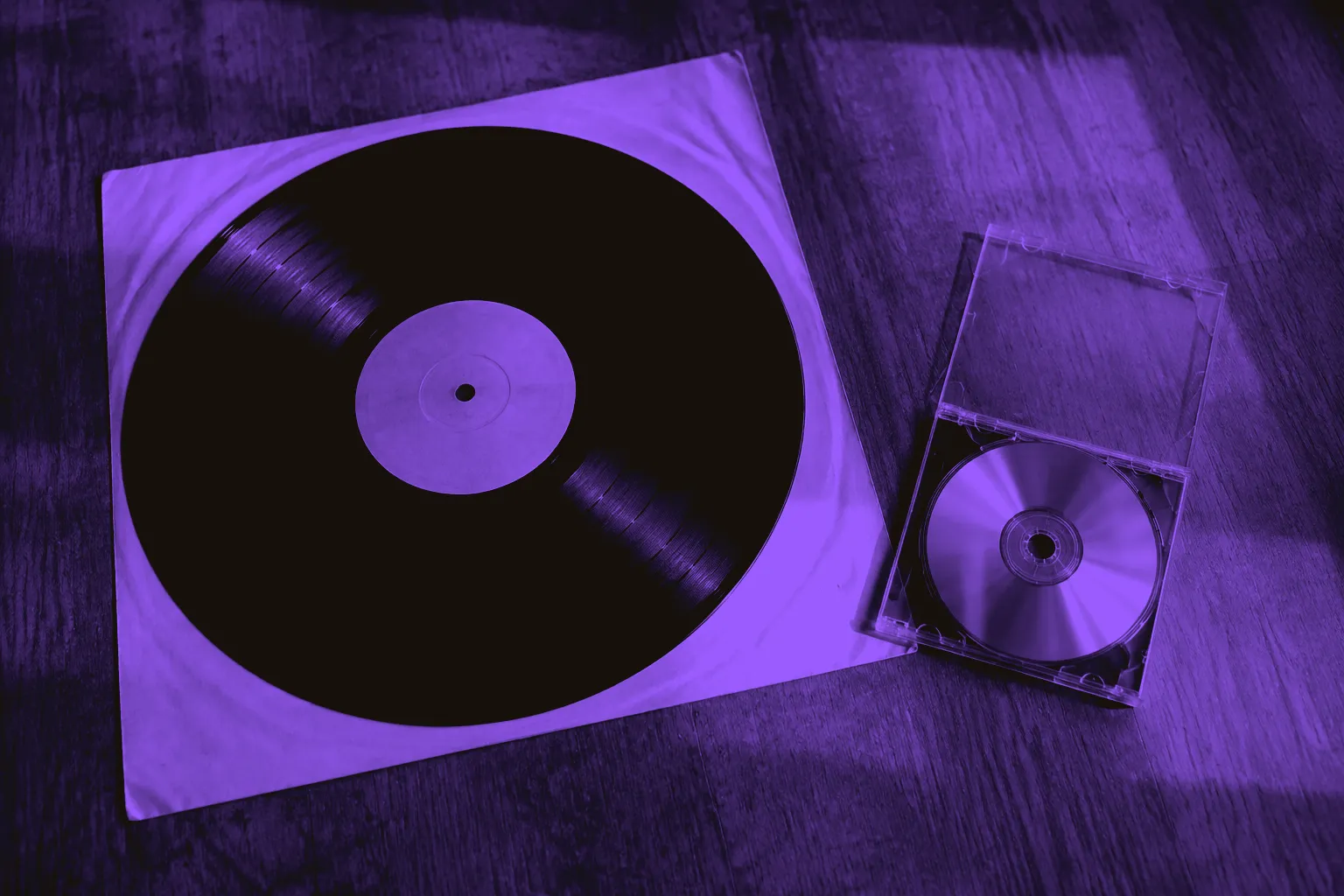
You find an album you want. The shop has it on vinyl and CD. One has a sleeve you could spend an evening looking at. The other costs less in this shop and fits in your coat pocket.
There is more to the choice than sound. When the album came out, which editions exist, how much attention you want to give the equipment, and whether you enjoy the object all matter. You are buying something to live with.
The year matters more than you might think
For much of the album era before CD, an LP was a central way a new record reached listeners. Cassettes mattered too. The change was gradual: CD launched in Japan in 1982 and reached Europe in 1983, rather than appearing at the end of the decade.
Record companies had two things to sell on the new format: new music and the albums people already owned. Sony’s first CD releases included Billy Joel’s 52nd Street. A back catalogue could have another life on a smaller disc, and listeners could buy their favourites again.
By the 1990s, CD was central to the album market. That matters when you shop now. A title from that period may have an original CD edition, a scarce contemporary LP, or no original vinyl edition at all. The answer depends on the album, country and label. Vinyl continued in dance music and other scenes.
Two examples make the distinction useful. Craft’s 2023 reissue of Jewel’s Spirit brought the 1998 album back to vinyl for the first time since its original year. Brian Wilson’s Imagination, also from 1998, was listed by Rhino for its first LP release in 2026.
So before hunting an “original vinyl,” check that one exists. A later reissue might be the first LP, not a second-best substitute. And an original CD from the album’s own era can be a perfectly satisfying thing to collect.
The recording and the format are different questions
Many older albums were recorded and mixed on analog tape. That does not mean every LP came through an entirely analog process, or that digital recording began with CD.
Denon describes digital recordings made in 1972 and released on LP, ten years before CD’s launch. A record can carry music from a digital recording or master. A CD can carry a transfer of an analog tape.
Recording, mixing, mastering and the disc you buy are separate stages. If an all-analog production chain matters to you, look for specific information about that edition. “On vinyl” does not supply it.
More useful questions are: is this the same mix? Who mastered it? Does it include the original track list? The matrix numbers in the runout often answer the second one. A remaster may sound different from an earlier edition without either format having won an argument.
One reads a groove; the other reads data
A stylus follows the groove, so dust, scratches, stylus condition and setup all reach your ears, and a worn needle or wrong tracking force can damage the record. A CD player reads the disc with a laser and nothing touches the music. Vinyl asks a little more of both the owner and the machine.
Error correction lets a CD player recover some imperfectly read data without an audible problem. It has limits. Enough damage or dirt can mean skipping, interrupted playback or a disc that will not read. The NIST preservation guide explains why a light scratch and a deep one can have very different consequences.
Both formats need care, but the faults behave differently. A record may play through a scratch and announce it on every revolution. A CD may sound unaffected until the player can no longer recover the data. Neither “a few marks” nor “looks clean” tells the whole story. Test a used copy when you can.
The album has to fit the disc
An LP side has physical limits. Fitting more music onto it involves choices about groove spacing and cutting level. The grooves near the centre are also harder to reproduce cleanly, especially with demanding material or an imperfect setup. Cutting and playback both matter.
That is why a long album on one CD may be spread across two LPs. You gain larger packaging and more sides to handle; you also gain more trips across the room. Check the track list and side breaks before buying, especially if you like to hear a long piece without interruption.
CD gives you direct track access and playback without a side change. Vinyl gives you a pause. Some evenings that pause is part of the pleasure. During dinner, it can feel like another small job.
You are buying the packaging too
A typical album LP is 12 inches across. A standard CD is 12 centimetres. The artwork gets a very different amount of room.
A large sleeve can make a photograph, illustration or gatefold worth sitting with. You can read credits without unfolding a tiny booklet, display a cover, or enjoy the wear on an old sleeve that has belonged to someone. If the object is part of why you collect, that counts.
A standard CD jewel case is a less romantic proposition: clear plastic, a hinge that can snap, little teeth that can break off the centre hub. The consolation is that an ordinary case is replaceable. Save the booklet and tray card; a cracked lid need not condemn the album.
Nor is every CD housed that way. Card sleeves, digipaks and substantial booklets can have their own appeal, though damaged printed packaging is harder to replace than a standard case. Some people find jewel cases charmless. Others grew up with them.
Compare copies, then count the cost
Cost can decide the question before you get to mastering or sleeve design. Say the used CD is €3 and the vinyl copy €30, a gap you will meet in many shops. The record then costs as much as ten CDs, and that changes how much unfamiliar music you can afford to try.
Those are an example, not a tariff for either format. A sought-after CD can be expensive; a record in a bargain bin can be cheap. Compare the particular editions, their condition and delivery costs. But when the ordinary CD costs a fraction of the LP, choosing it leaves money for the next album.
You may still want the larger sleeve and the experience of playing the record. That can be worth paying for. It does not make the €3 CD a lesser way to enjoy the music.
Include playback equipment and storage. A CD player you already own changes the calculation. A turntable setup may need speakers, amplification and a phono preamp, depending on what is built in. We cover the basics in our guide to starting a collection.
For records, ask about audible wear as well as visible marks. For CDs, check playback, the booklet and the track list. For either, make sure the seller’s photographs show the edition you expect.
If you have both versions at home, compare them at similar playback levels. Listen to a passage you know. You are finding a copy you enjoy, not defending your shelves.
Leave room for both
You might collect older favourites on LP for the sleeves and the connection to their original release, then buy 1990s albums on CD because those are the copies you remember. Or do the reverse. Availability, curiosity and a good find will rearrange any tidy policy eventually.
Both let you own music you can play on a suitable standalone system without internet or a music subscription. Keep the format in your catalogue, a notebook or Kura will do, so the next duplicate is at least an informed decision.
Two formats sit at the edges of this choice. Cassettes are cheap in used bins, but tape wears with every play and a working deck is the harder thing to find. Super Audio CD, launched by Sony and Philips in 1999, looks like a CD and carries a higher-resolution layer that only an SACD player reads; most are hybrids with a normal CD layer, so one plays anywhere but only sounds different on the right machine. Both are worth a shelf if an album you love exists on them. Neither changes the vinyl-or-CD question for most records.
In the end, this is an emotional purchase. The €3 CD might be the album you played all summer at seventeen. The €30 record might have a sleeve you have wanted on your shelf for years. You can understand the price difference and still want either one.
Buy what you can afford and will enjoy having. The point is the pleasure of taking it home, putting it on and wanting to hear it again.